
December 23rd and 24th, 2022
I.
A bus that wasn’t green finally pulled up to my stop. Some soft, steadily creeping panic pressurized in my blood, traveling like soda through a straw up my veins. I stared dumbfounded at its exterior, hoping that I was being tricked by the dim streetlights. I could see passengers inside clinging to grab handles above their heads; there was no way this small bus was interstate. It was also running very late. I had been standing here hugging my duffle bag on this dark sidewalk, waiting in complete ignorance long past its scheduled arrival. I would have left earlier if another young lady hadn’t eventually joined me. I told myself that it was a bus and buses are always late and why would someone else be here if not to get on the same bus as me, etc. I barricaded myself against panic as the doors hissed opened, declaring their ultimatum to me. People began moving in and out. I should have realized then that I was at the wrong station and had likely missed my bus, but I was in disbelief and paralyzed by indecision. I worked up enough courage to step inside and ask the driver.
“Is this a Loop bus? Is it going to Sacramento?”
He looked at me with blue-collar disinterest and shook his head. I realized immediately how dumb of a question it was considering no sort of logo or indication was visible on the outside. I stood for a moment wondering what to do. What if I just got on this bus anyways? Maybe this was where I was supposed to be. I didn’t have any sort of ticket or pass. I felt the eyes of the passengers each passing second I stood by the door; a naive suburbanite delaying their commute. My panic had finally breached. I gotta get out of here. I stepped back outside and started frantically searching my phone for another bus stop. Perhaps, I could run and make it. I grabbed my stuff and started sprinting down the street, but I wasn’t really going anywhere. The burst of adrenaline deluded me into thinking I had an objective. I reached a main road by the civic center. Vendors stood outside its hall with their small, illuminated stoves that sizzled with beef, calling out to attendees descending the steps. The movement of people, their frantic energy that fed into the spirit of the city seemed to express my current temperament. I sat on a concrete step and tried to conceive of spending Christmas alone. This was an absurd, needlessly self-abasing thought. Sam’s family would have gladly had me if I got stuck in San Jose. In my defense, there’s nothing so existentially jarring as the sudden disastrous collapse of great plans—like a horrible adult nightmare.
Some contrarian part of me resolved itself to sit on those steps and suffer, but my sulking was cut short by Ted, who had arranged for the bus in the first place and was asking me for an update. I frantically explained my situation over the phone, feeling stupid and confused, but also deep shame for wasting his ticket. I accused Google of directing me to the wrong bus stop, hoping I could pin the blame on some app and not my horrible sense of direction. As is typical of my brother, if there was any frustration in him, he didn’t make it known to me. Generously, he called me an Uber. My intended stop was 2 hours away in Sacramento.
I admit that even as I write this, I’m embarrassed by the effort spent on my behalf to get me to Portland. I had already endured one setback when my flight was cancelled. This missed bus was a last-ditch effort, even if it meant spending most of Christmas Eve on the road. I suppose that, apart from everyone’s obvious desire to see me, my temporary misfortune was family lore in the making, but I’m getting ahead of myself.
My Uber arrived and I rested in a dark leather seat as he rode Highway 80. I watched the lights sweep through the interior and over my face. It wasn’t very often at this point in my life that I would sit in the back seat of a car, head resting uncomfortably on the cold glass of a window, letting my eyelids weigh heavy as the pulsating rhythm of streetlights put me to sleep. I felt myself gifted a moment of childhood. I wondered what this driver must be thinking of, and if a 2-hour trip was normal for him; if he intended to drive all the way back home after he was done with me. I should have just asked him all these things.


II.
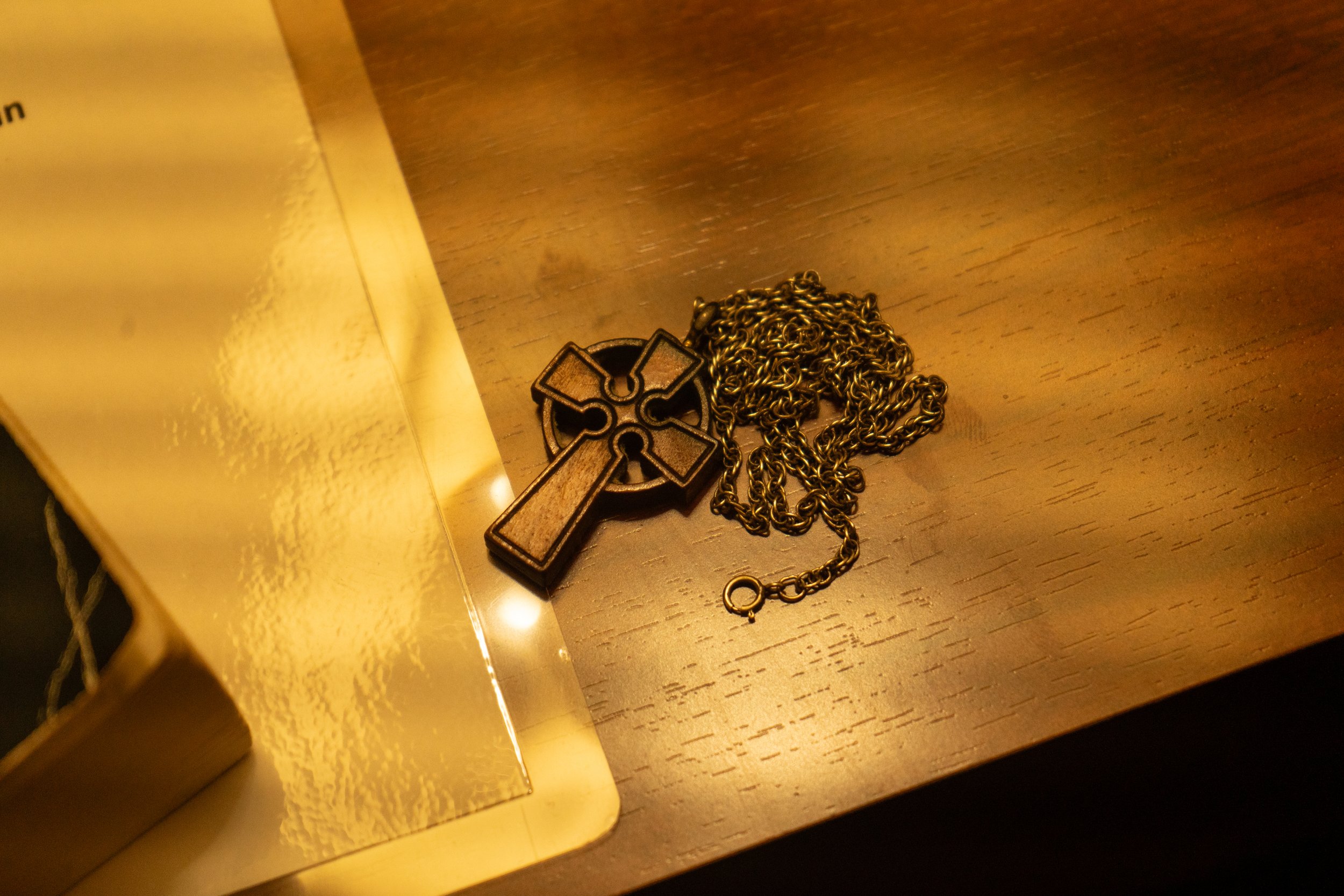
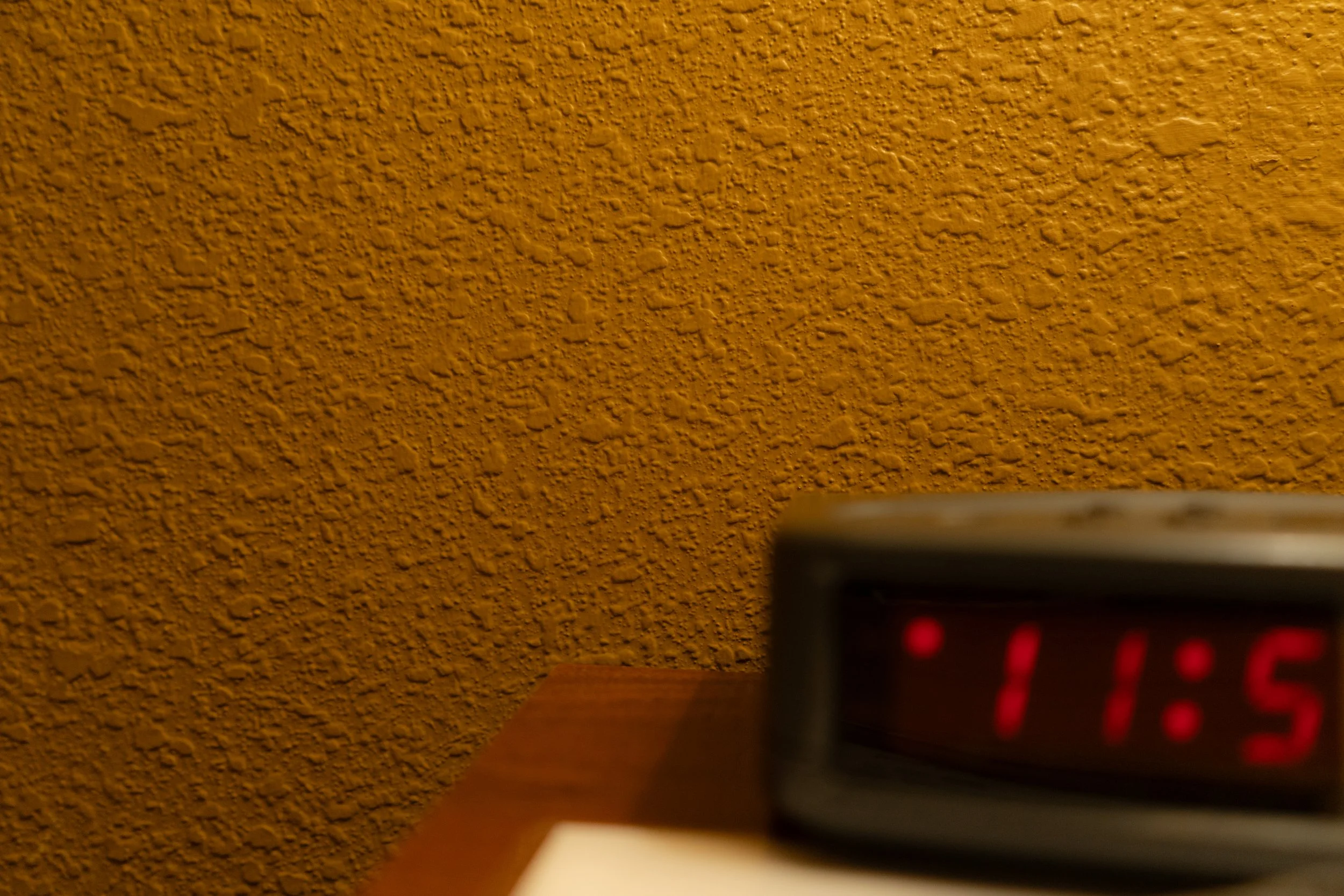
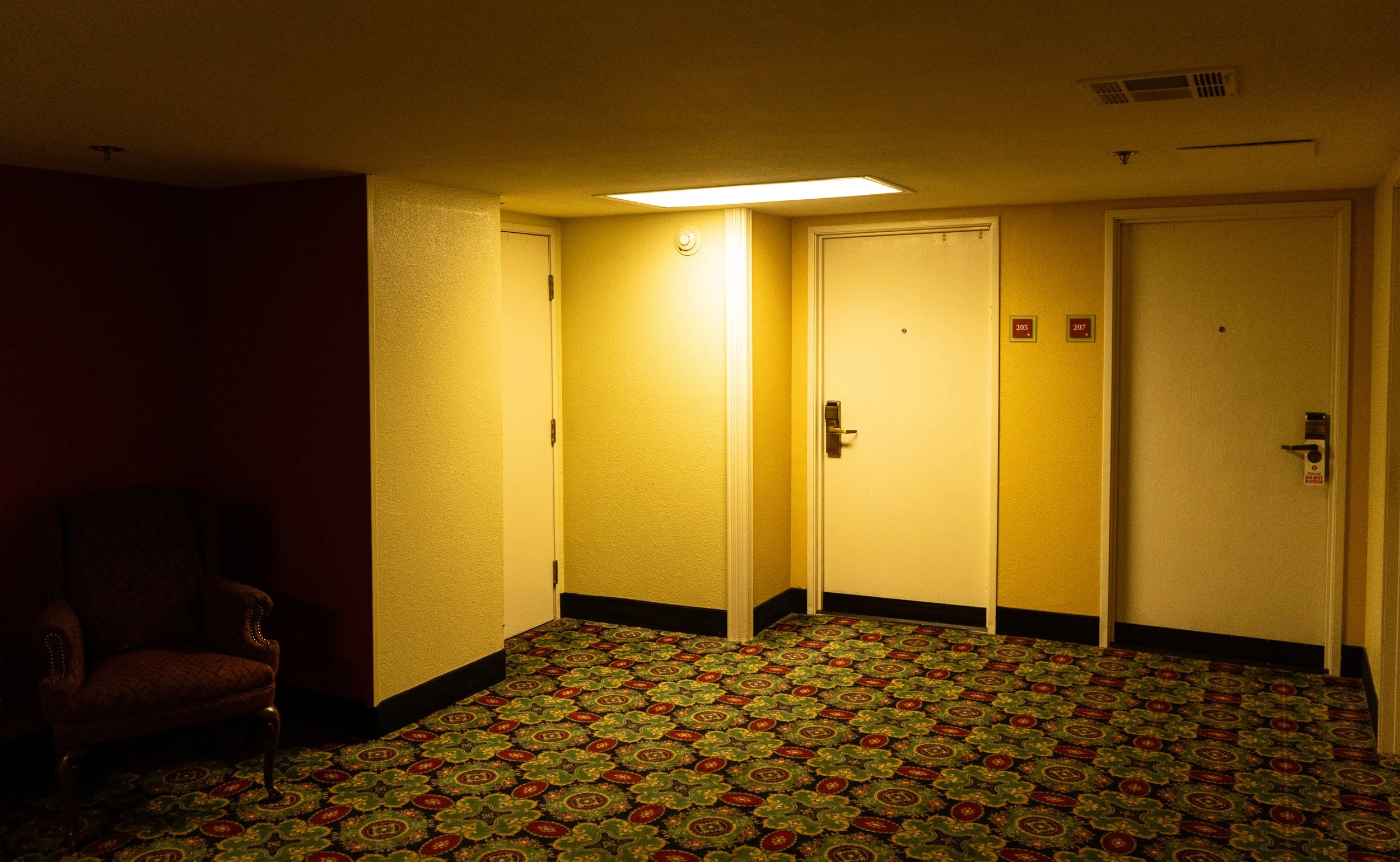
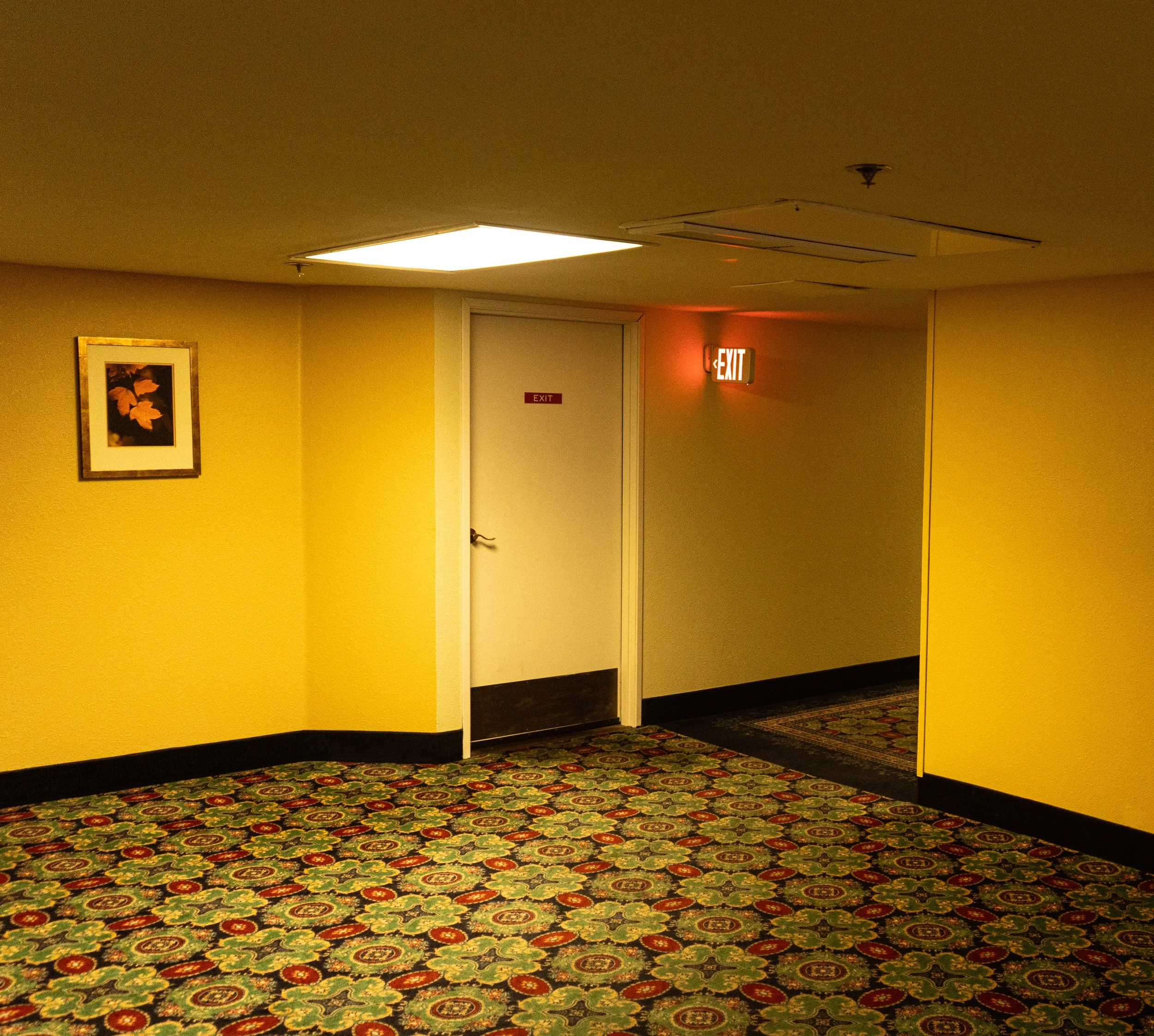
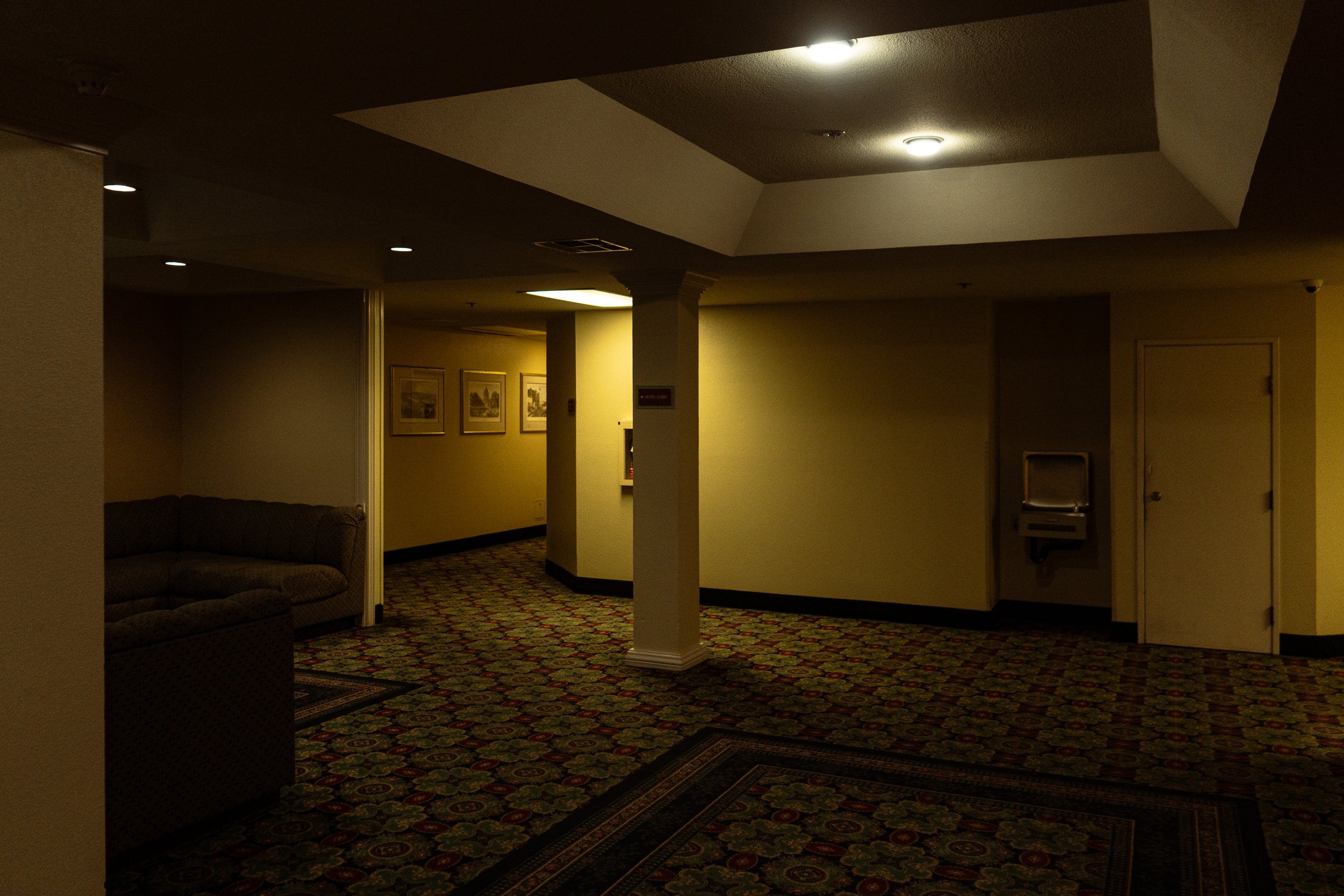
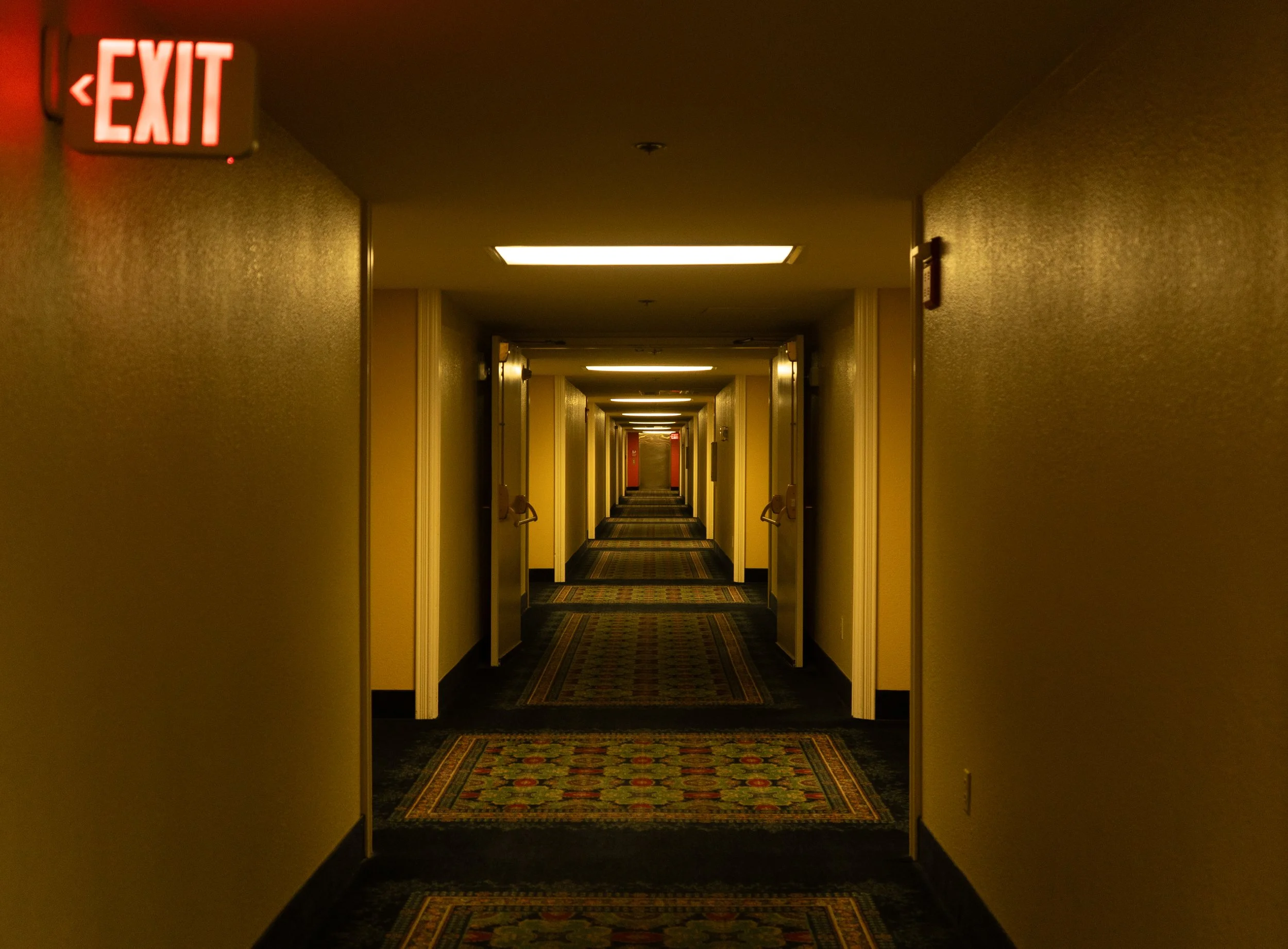
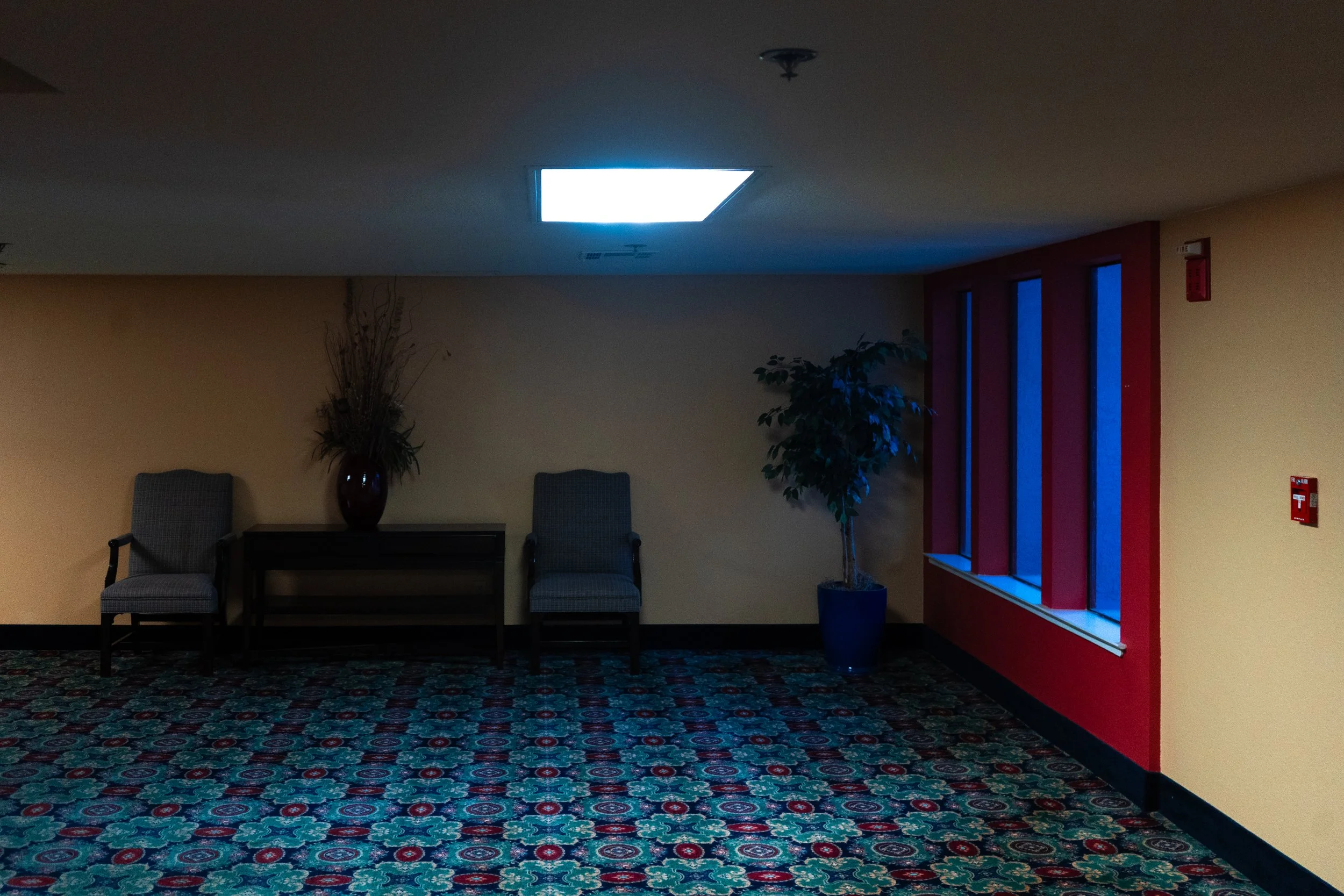
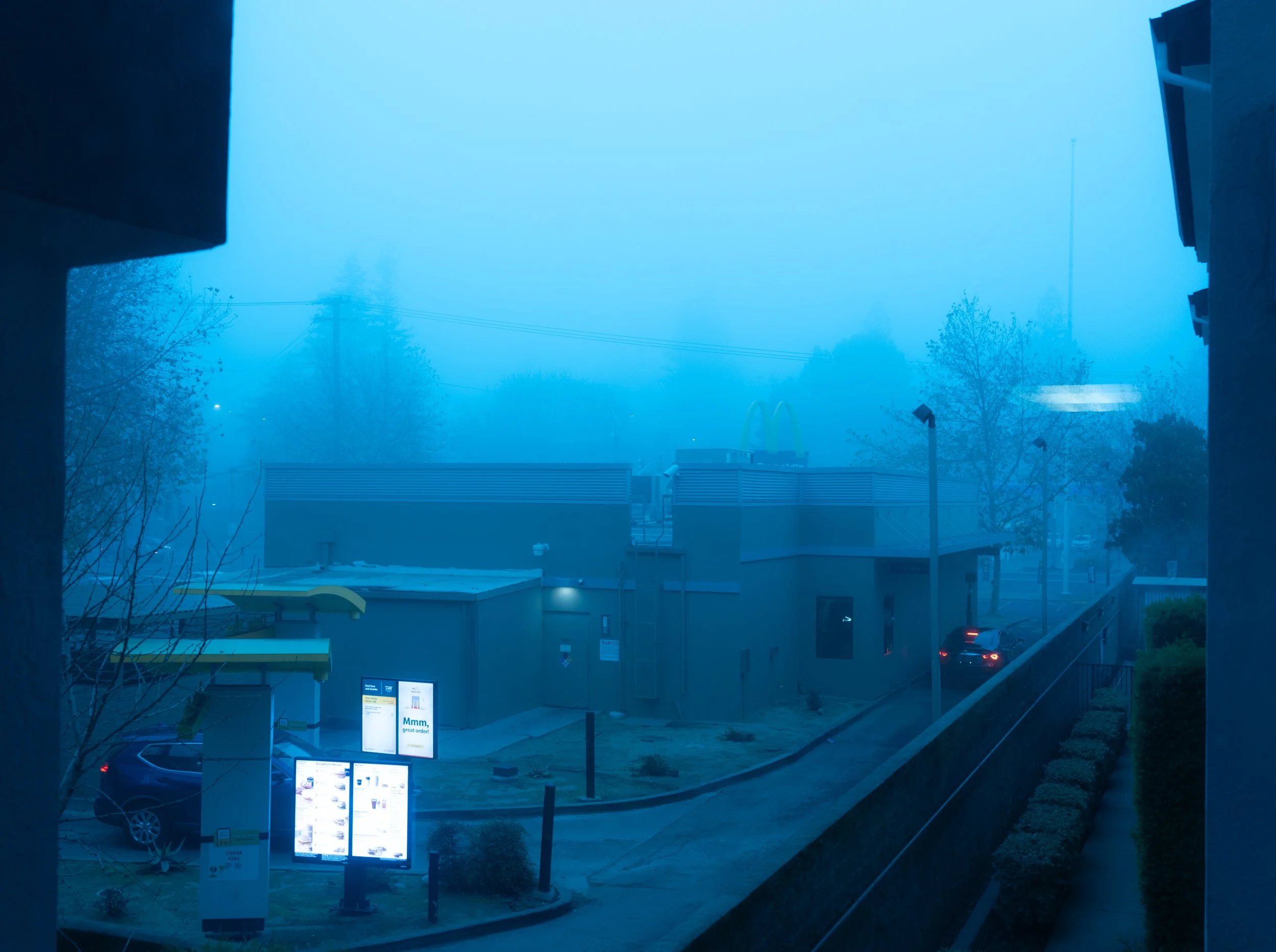
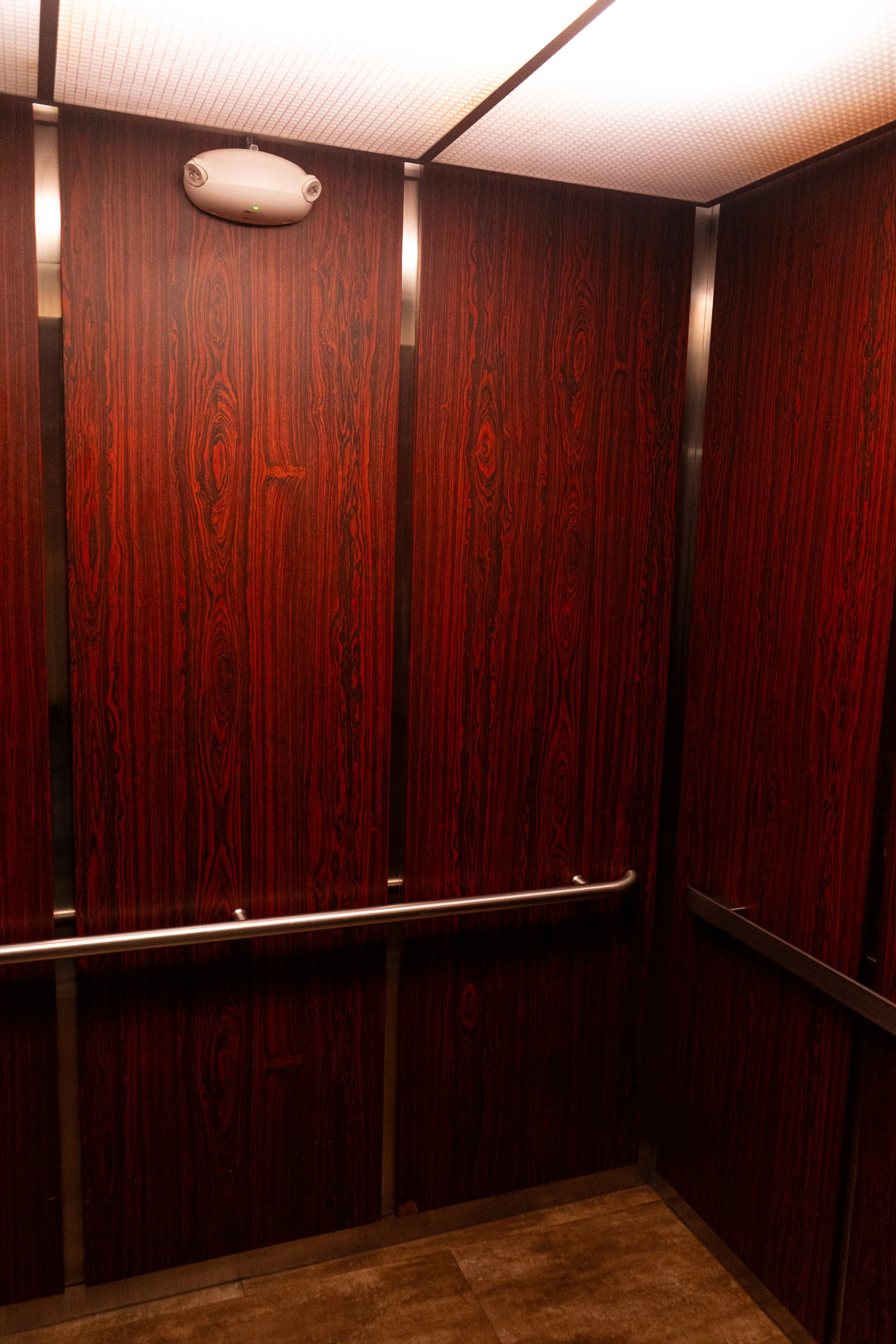
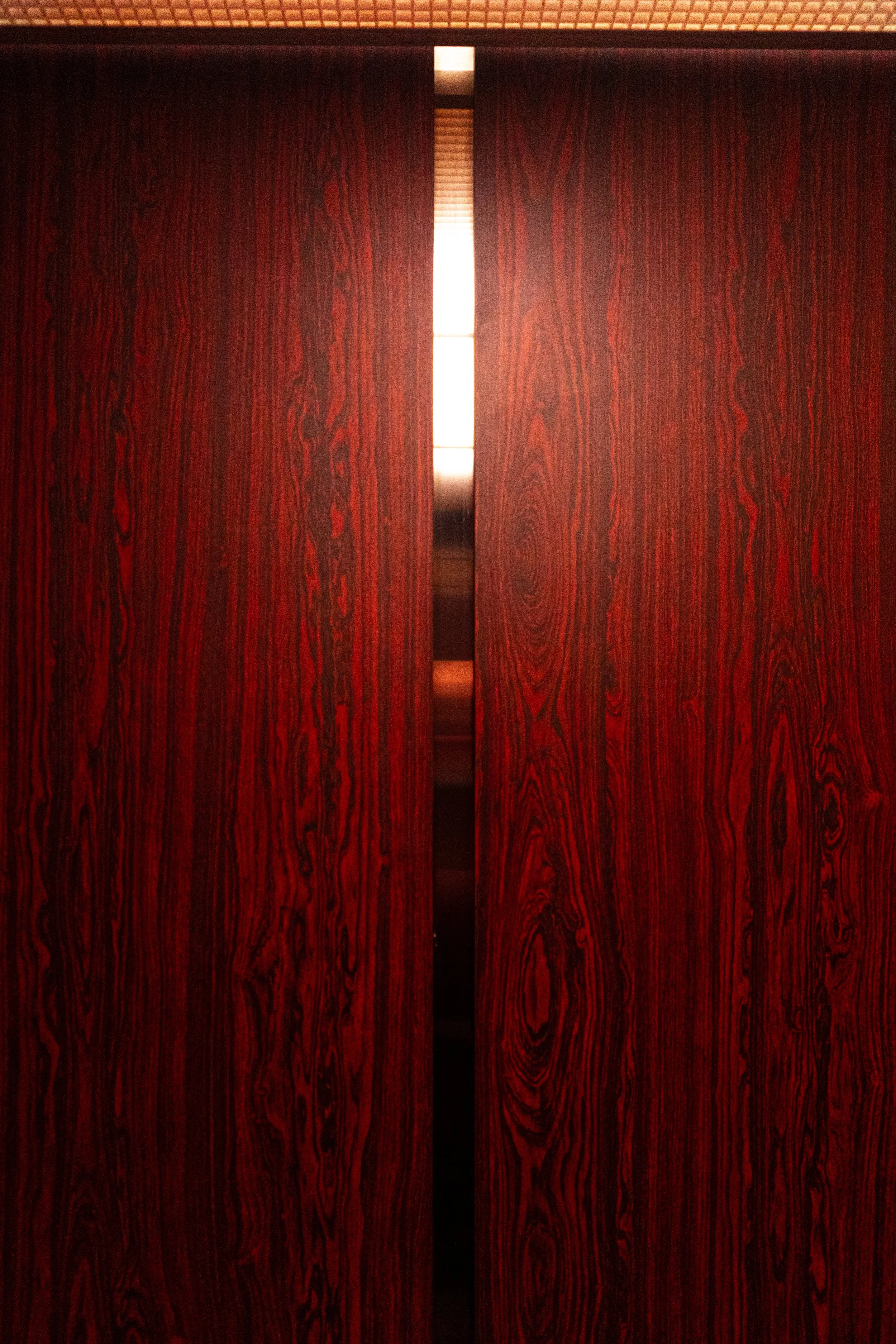
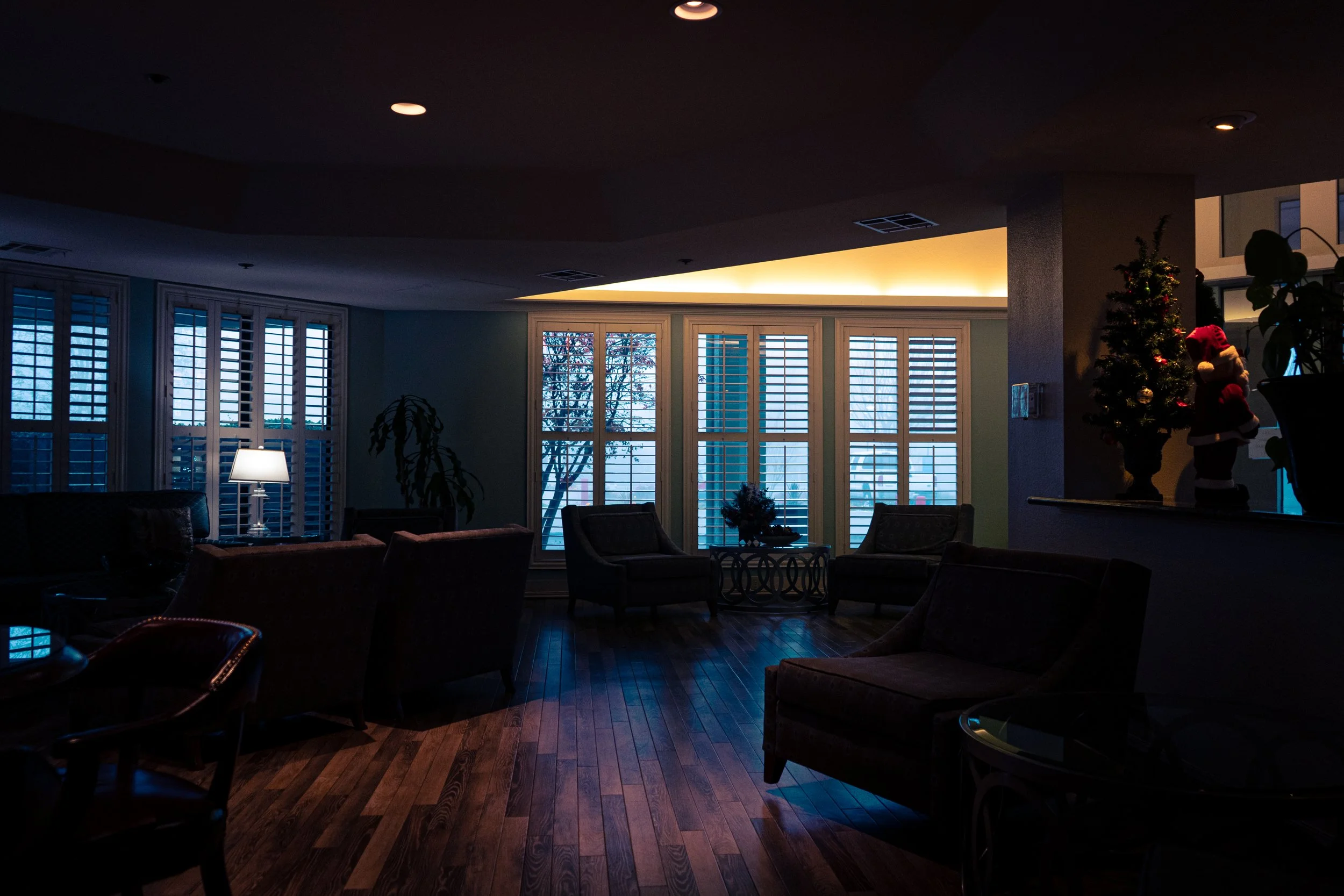
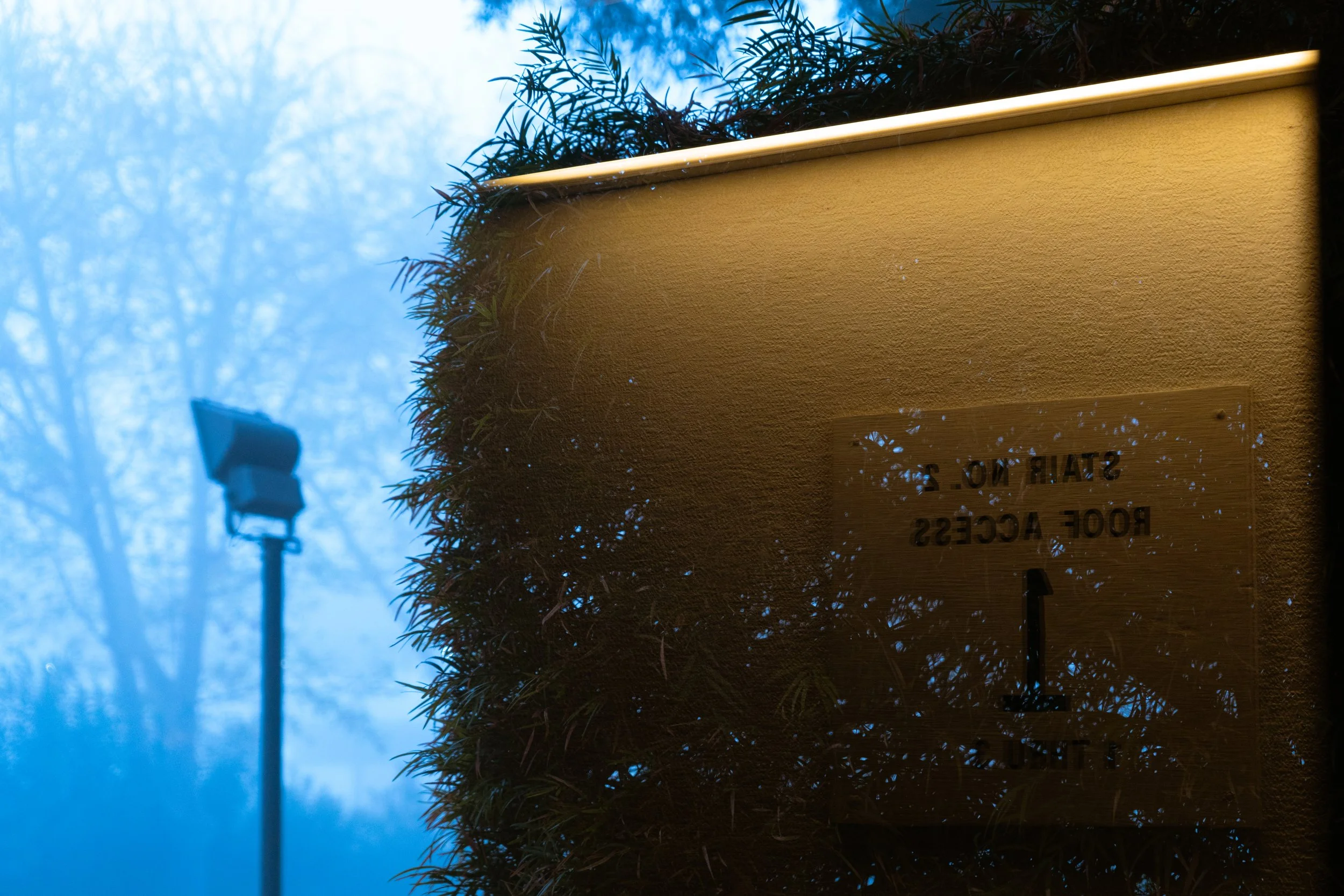
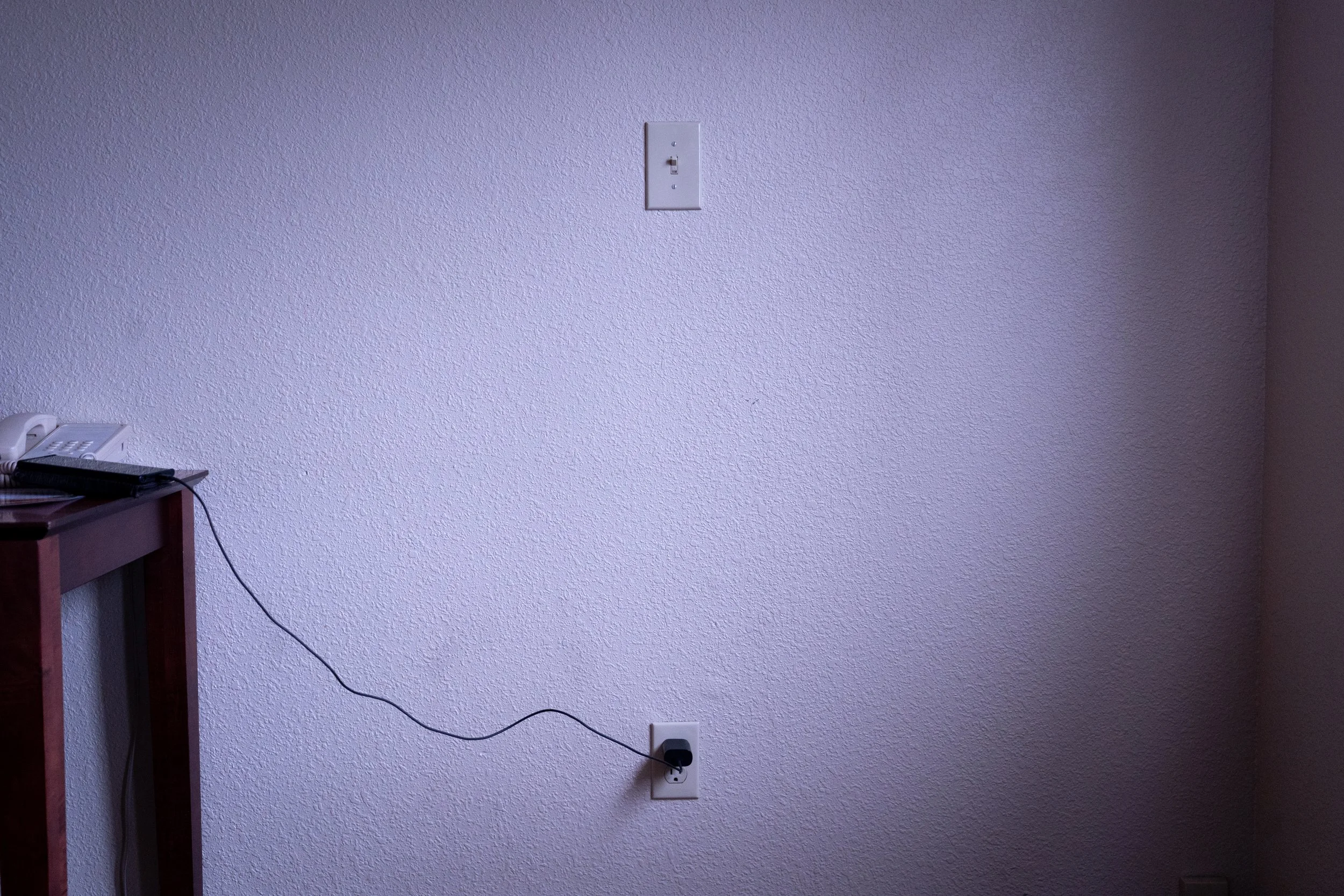
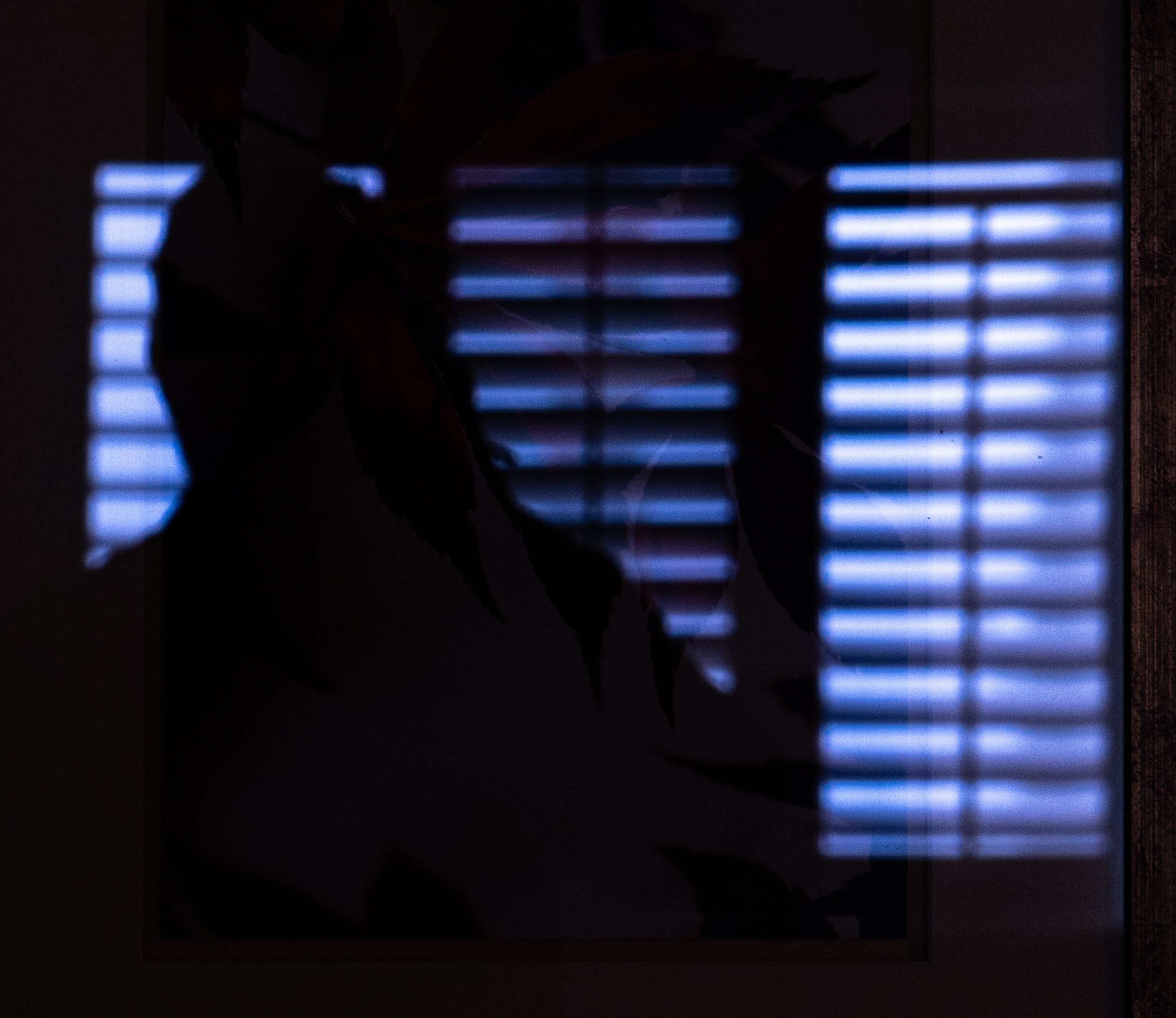
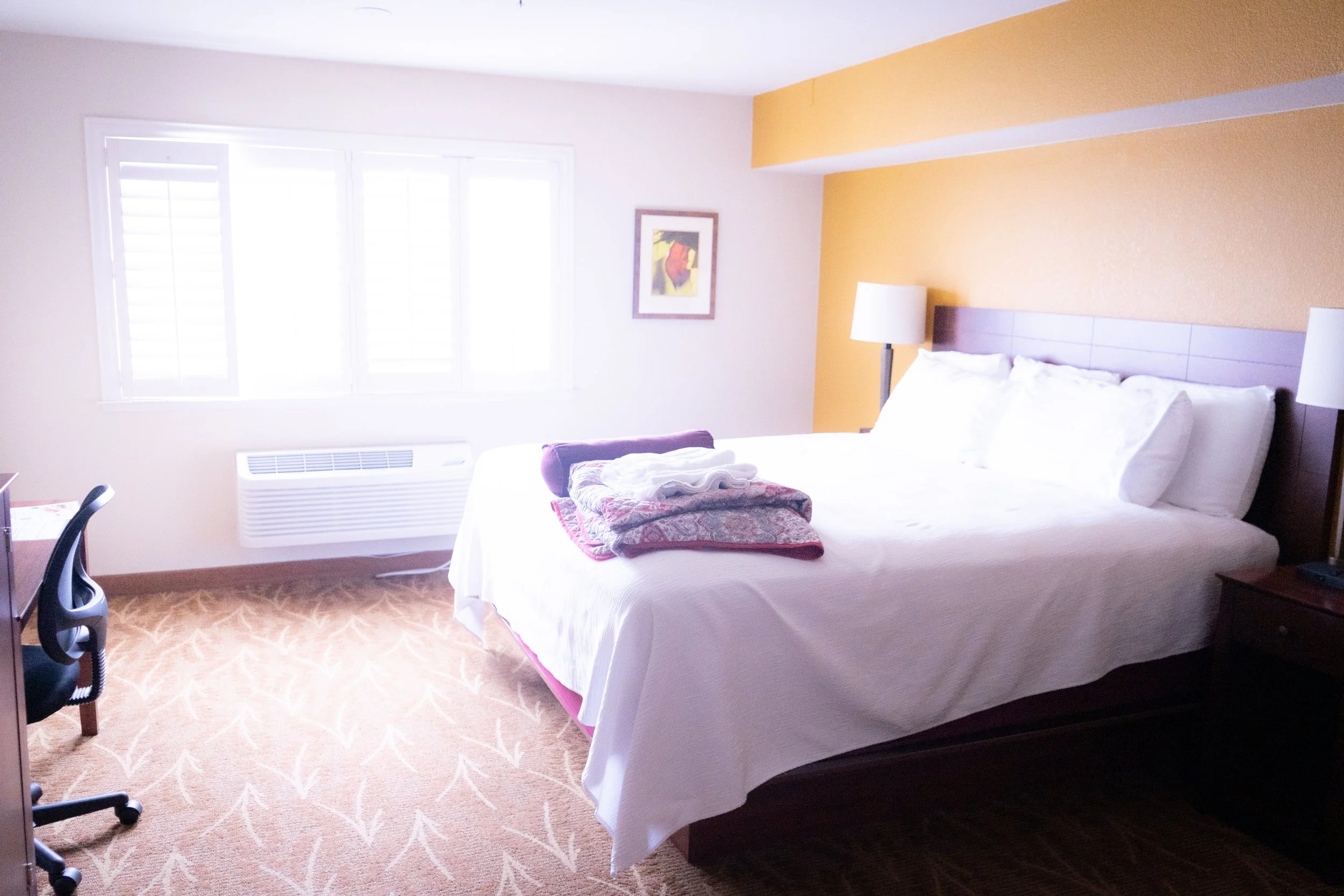
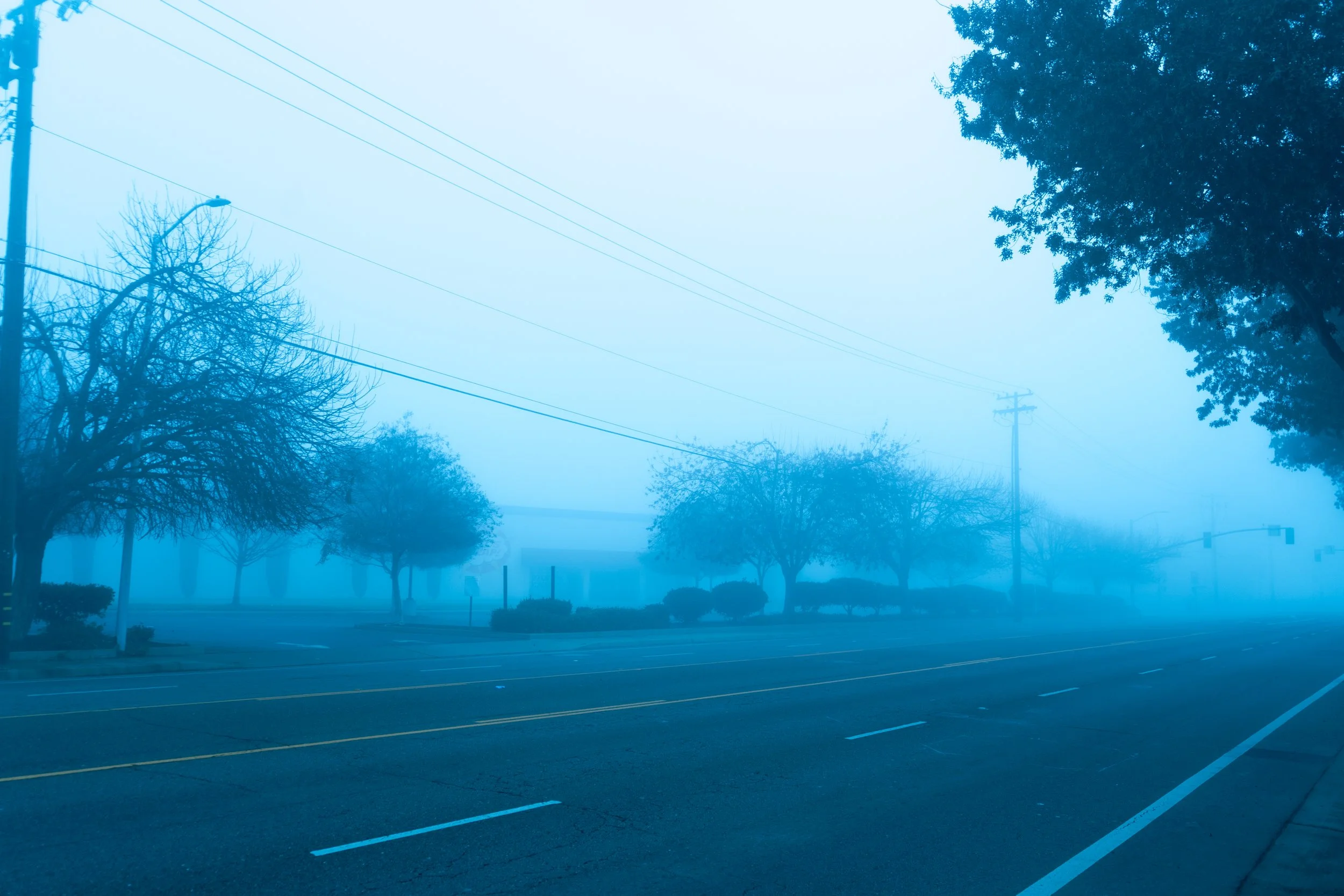
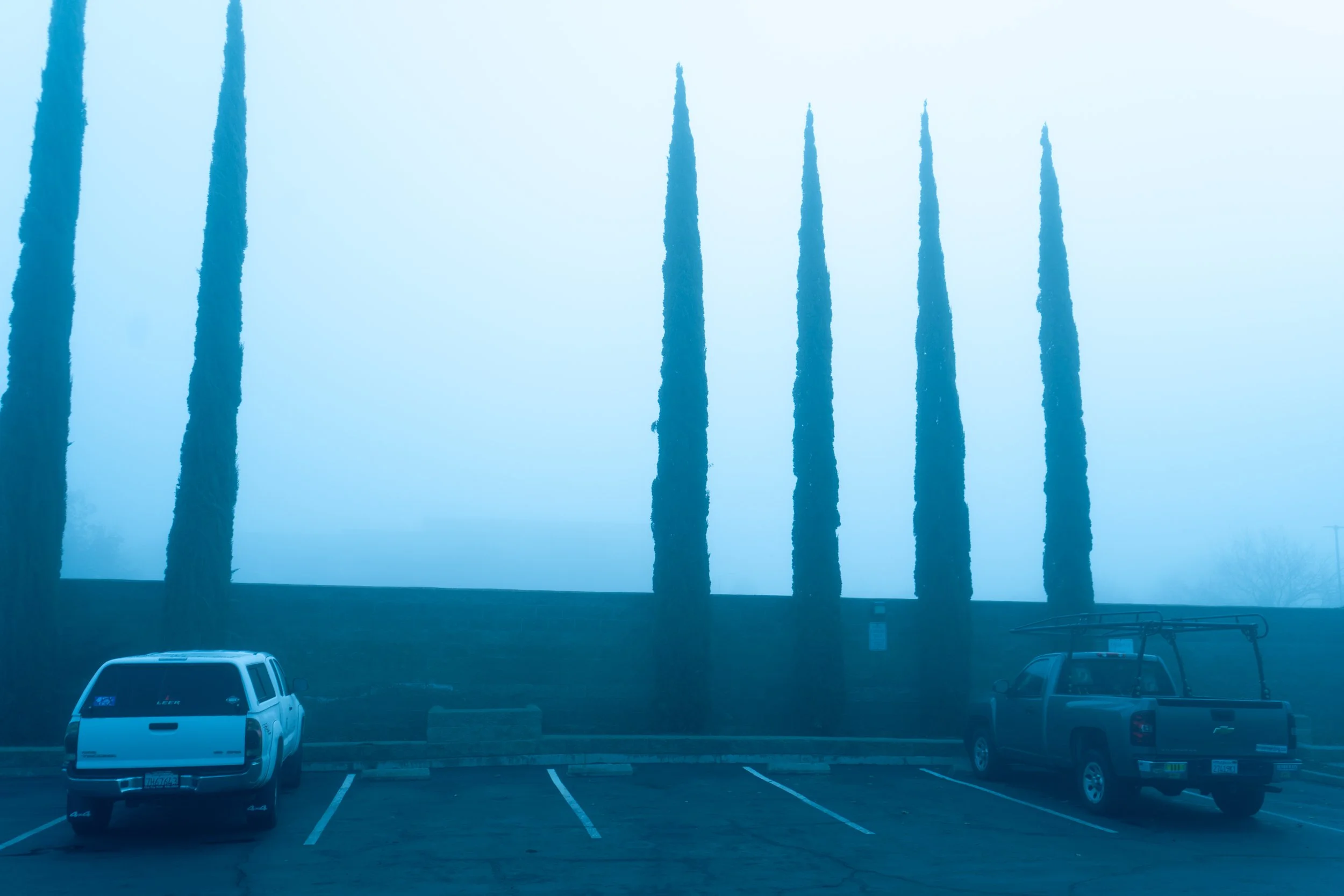
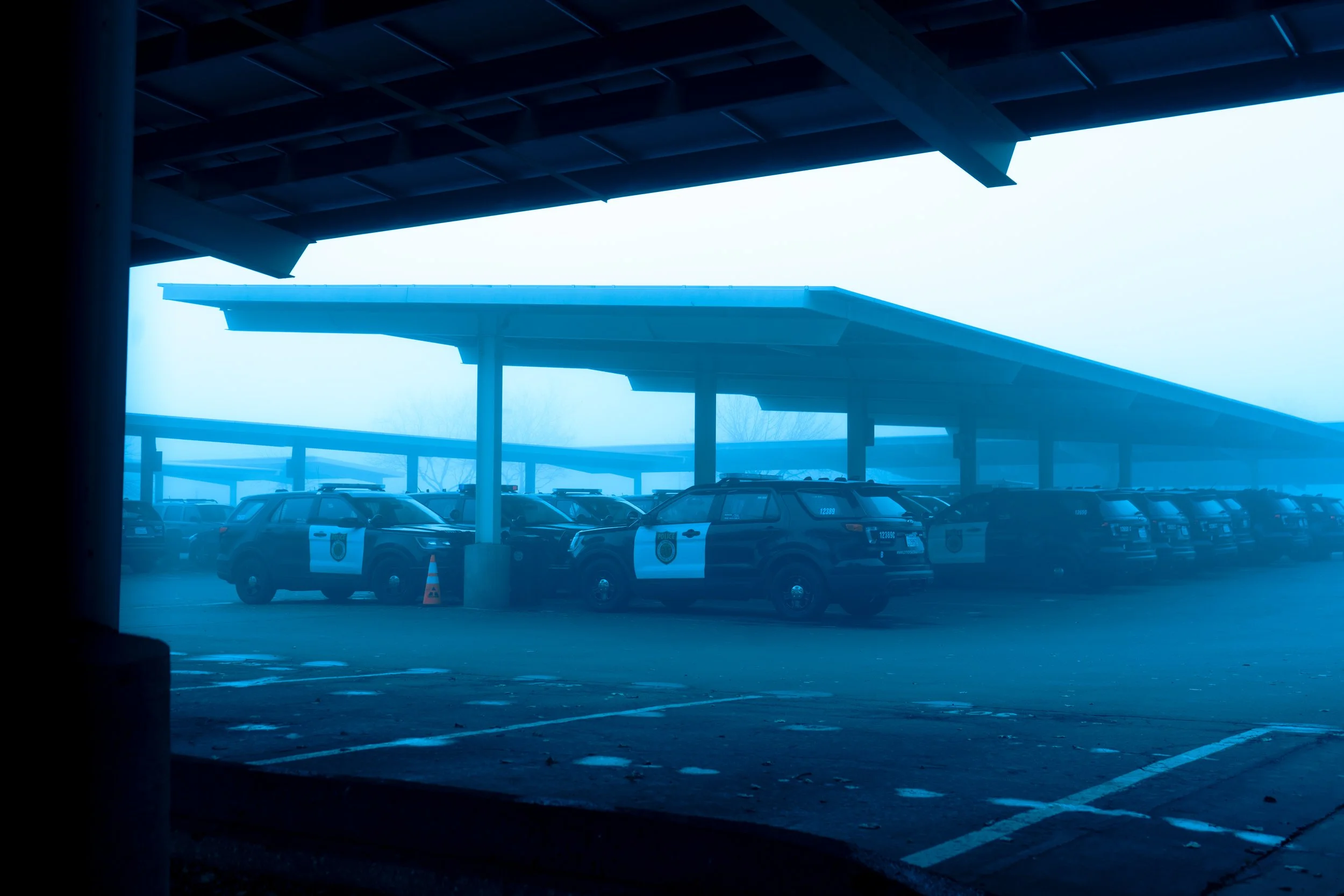
I arrived late at a small motel in Sacramento where I enjoyed a brief respite in a very stressful trip. Unfortunately, I don’t have much of an artistic instinct when I’m under pressure, and so most of what you’ll see comes from this narrow window of time. They do very little to capture the whiplash of tedium and stress I had to stomach during a period of 48 hours. I’ll admit though, I very much enjoy the incongruent nature of their aesthetic with my trip, and I find it difficult to articulate why. I suppose there is something powerful in an image that is paradoxically enriched by context and completely starved of it. We are almost always existing in large periods of nondescript time that sit as vague dividers compacting narrow slits of meaningful experience. It gives photography some feeling of rebellion to immortalize and make sacred these discarded moments of buffering.
I walked for a bit in the lonely, carpeted halls of the hotel, indulging in the photographic cliches of doorways and exit signs. Ted called me again to reiterate the next steps of the trip and to make sure I was okay. I listened to him as I lay on a cardboard mattress.
In the morning, I ate breakfast alone, save for a front desk employee who disappeared into their sinking chair behind the tall counter. There was a small white cage that sat awkwardly by the front sliding doors; inside a family of Budgerigars rattled loudly in conversation, their disruptive chirrups echoing in the empty lobby. I had enough foresight to stuff an extra muffin in my pocket. Had I known that this was the only real food I’d eat on the trip, I’d have pirated more from the buffet.
III.
I made my way to the bus station a few blocks from the hotel. The world around me was unrendered in the morning fog, obscuring what was probably an empty street. I had no geographic sense of where I was; I just bowed my head and gazed uncritically at my phone as it led me in some direction. I wish I could have delayed a bit to photograph, but I was anxiously aware of how much money in camera equipment I could potentially lose if I was robbed here, not to mention the general urgency this situation required. I was invigorated by the cold air, and it renewed in me a hope of making it to Portland before Christmas.
I was immediately tense when I entered the bus station, but I’m always tense so what does that even matter. I’ll admit now that I had been somewhat suburbanized since COVID. I took the train frequently in college, even after I was assaulted, but that incident set in me an unjustified paranoia of other people. I made note of the children of God I profiled, those that lay on the benches, cursing and whispering prayers to themselves or hovering in the corners near vending machines. Irrespective of them, it was an unpleasant place. The open design of the building provided no insulation but funneled in the cold air to rest on dirty concrete floors. Harsh fluorescent lights sat on the high ceiling beaming down on opaque plastic clerk windows. No one seemed to be in a good mood, but it was Christmas Eve, and I wouldn’t have been surprised if we were all in the same miserable scenario.
I joined a line that stretched through the station and out towards a small parking lot of buses. A man near the front gestured in barely restrained fury about his ticket to an employee. A small Asian lady attempted to shuffle around him to get onto the bus, but the man was not about let to himself be ostracized from the line, and he redirected his righteous anger at her.
“This doesn’t concern you!” he yelled. It was a vague and directionless statement that didn’t really apply to what she was doing, more of a cliché to throw out in times of stress. Some reassurance was eventually made that led him to apologize, not to the woman or anyone in particular, but more of a generalized admission of embarrassment in his behavior.
I shuffled through the aisle to my seat, eyeing the fabric pilling and lint that clung to its worn blue cushions. I don’t know where I got the notion that Greyhound buses were luxurious, but it should have been increasingly obvious how wrong I was the closer I got to riding one. A passenger a few rows ahead of me discreetly swallowed a pill I recognized to be Dramamine. I was prone to intense motion sickness as a child, although it had become less of an issue as I got older. Regardless, I watched them with unease.
IV.
Within a few minutes of departure, I became aware of a faint but lingering odor that sat in the space, resisting the interjection of the AC. I looked behind me to see the bathroom door at the back of the bus (I was somewhere in the middle). It was inoffensive enough to be ignored, although I realize now that my terrible sense of smell might have been shielding me.
My limited understanding of buses was rooted in a single trip I took from New York to Boston during my Sophomore year of high school. I rode in a two-story Megabus for a comfortable if uneventful ride. I remembered we stopped at a mall complex for an extended lunch break.
I allowed myself to relax as we merged onto Highway 5. There wasn’t anything more I had to do other than keep an eye out once we entered Oregon. The Greyhound’s destination was Seattle, and Portland would undoubtedly only be a few stops before.
Highway 5 was a route I had deeply familiarized myself with after frequent back-and-forths to see my family upstate. The road stretched flat for miles along golden California plains until it reached the northern border, after which it moved cautiously in the shadow of the great Shasta peak, snaking up through forested cliffsides cushioned between the Klamath and Cascade mountains. It ascended high before slowly dipping into the rolling green hills of southern Oregon, trading the farmland of the Central Valley for that of the Pacific Northwest.
It was a long and exhausting trip that spanned 10 to 12 hours, but I had come to use a series of landmarks to mark its progress and give myself some comfort: the first sighting of Shasta, the “State” of Jefferson, a rainbow row of colored trucks, etc.
The first of many dreads that accumulated on this trip began when I noticed the rate at which I was reaching these landmarks. My memory shifted impatiently in its seat as the road crawled forward slowly, each marker dragged into view like laggard props wheeled in for a stage play. I watched the blur of smaller vehicles wipe us on the left, and I thought how much quicker I could be, how much more progress I would have made at this point, if I had simply driven myself. This was something I considered when my flight was first canceled, but I was warned against it given the icy conditions I was likely to encounter in the mountains. I wondered if this bus was moving slow out of caution. There didn’t seem to be much snow anywhere. Regardless, I was now the lumbering elephant I once overtook on the highway.
V.
We dragged ourselves up to the town of Redding, which under the gaze of Shasta. I was growing hungry and expected a lunch stop soon, assuming the protocol for Greyhound was the same as Megabus. The driver pulled up to one of those hybrid fast food/gas station abominations that exist as the peak of American culture, announcing a ten-minute pit stop while she refilled on gas. I stepped out onto the pavement hearing the roaring drone of the highway. It seemed absurd on such a long journey that this would be the point at which we were expected to get lunch. Given the complete route, we weren’t even halfway there. It may have been privileged of me to make assumptions about food.
Two lines formed at the bathroom and front counter. I eyed some chicken tenders and potato wedges that sat warm behind the plastic window of a hot buffet. However, my priority was the bathroom, after which I added myself to the line for fast food. I realized too late that there was no way I could accomplish both goals. There were at least thirty passengers crowding this small gas station. I checked the time on my phone. I had 2 minutes. Why didn’t I choose the food and just use the bus stall? But no, that bathroom was probably disgusting and I hated the thought of other people hearing me in such a confined space. I was nearly at the front of the line. My timer sounded. The person ahead of me resigned themselves to starve and ran back to the bus. I was almost at the front. Perhaps, I could take a chance and ignore the driver’s warning. There was only one clerk left to man the register and buffet, and he was in the middle of a purchase. Another man behind me stood uneasy with his fountain drink.
The tension was cut suddenly by the erupting reprimand of the bus horn. I dropped all pretense of eating and rushed back, followed closely by the man and his soda. I could hear the driver scolding us even before we were inside. She looked at the man with suspicion and realized he had run off with a free coke.
“Uh uh, I ain’t playing around with that. Go pay for your drink!”
He sheepishly darted back into the store as I took my seat. I unfolded the napkin holding the hotel muffin. We had already visited several gas stations, and this was supposed to be the final stop for some real food. I was beginning to feel like a prisoner under supervision and limited recreation time. I munched on my breakfast ration.

VI.
It was at this point that the smell emanating from the bathroom was becoming more pronounced, even for my dull olfaction. In shame, each passenger dismissed themselves to the back for relief, contributing against their will to the putrid odor that we all detested. I abstained in protest.
Unlike on any other public or commercial transportation, it seems inevitable that the passengers on a long bus ride form some thin but modest relationship with their driver. It can’t really be helped in a confined space. They become impatient children, sometimes bickering or asking for updates, mostly sitting in silence. A few chatty ones sitting closest to the driver are destined to make conversation. Of course, we all can’t help but eavesdrop. I was too far back to pick up on exact dialogue, but I could always summarize the general balance of the discussion.
I had gathered so far that this driver was only going to be with us until Shasta, at which point she would switch off with another employee. But some details of this information were becoming distressing to the people at the front. What began as a casual conversation between the driver and first row passengers changed into a curt and somewhat tense exchange with lots of hanging questions. None of this was very clear to me.
We continued to climb into the higher elevation of the Shasta area before pulling into a remote station surrounded by a dense forest. It was a clear day, and the white peak of the mountain loomed over us. The driver looked about the area nervously, and the anxious questions seemed to increase. It became difficult to ignore, and I listened intently, expecting a possible bus swap.
She shook her head in frustration. There was no replacement driver awaiting us. In fact, the station appeared quite empty. She didn’t have any idea when the next bus would be arriving, but it seemed more likely that there wouldn’t be any for the rest of the day. The vague tension transformed into real panic as passengers eyed one another. More questions were rapidly lobbed at the front. Someone asked if there were motels in the area. The driver shook her head again but didn’t seem very certain. She grabbed her phone and dialed someone at work. Another passenger remarked that there wasn’t anything around: no places to rest, no food, no nearby town. We were sitting in a dead zone meant only for exchange. The driver informed us that her coworker had called in sick and could not meet her halfway. She looked back at us in resignation.
“I don’t know what I’m supposed to do. I… I don’t know what to tell you. I have to be back in Sacramento. I can’t drive up to Seattle, I gotta be home for Christmas. Ya’ll might have to come with me back down.”
A strange communal anger and confusion agglutinated us into a single being that pleaded and begged with her.
“Where do we go? This isn’t fair to you!” A passenger yelled, “Call your boss! They shouldn’t have put you in this situation!”
The driver dialed again, this time on speaker phone. From my row, it was harder to hear, but I assumed the disinterested voice on the other end was her boss. She recounted the dilemma to him as she clutched the phone close to her chest, hesitant at first to share the conversation with us. She eventually extended it out to be heard by everyone inside, although the boss didn’t seem aware we were listening. It was a futile effort on the driver’s part. Her boss didn’t in anyway sound concerned by the urgency of the situation. He concurred that she should return to Sacramento. There wasn’t even so much as an apology to her or the passengers, mostly just a lot of rehearsed policy and the repetitions of “unfortunately” and “nothing we can do”.
There was a general deflated sigh as passengers started shuffling to disembark. The communal pleading had dissipated, and now everyone was fending for themselves, alone in their thoughts to formulate rescues in the pandemonium. The driver mumbled apologies tempered with justifications. None of us listened, although no one really blamed her. Who among us could expect her to miss Christmas any more than we might? Her phone call had redirected most of our anger at management.
I stepped outside as the baggage compartment opened for people to grab their luggage below. I snatched my duffle bag and found a spot down the lane to pace nervously. Everyone scattered about the station, but no one wandered very far. A foolish hope lingered in all of us that the driver could be pitied into completing the route. I was once again frozen with sheer panic just as I had been when I missed the first bus. I had absolutely no clue what to do. Returning to Sacramento was pretty quickly ruled out. I wasn’t about to spend another four hours to reverse all my progress. I searched Google Maps to see the time between here and Portland: six hours at least. I didn’t even want to imagine the Uber bill. It was a monumental request, but maybe someone from the family could make the journey down (in the spirit of Christmas). But what an awful thing to throw onto anyone. I sat on a bench. I had an urge to cry even though my body didn’t feel compelled to by the situation. I relieved some of my stress by ranting to Sam over text. It seemed that at every stage of this trip, I would have to wrestle it furiously in the direction of Oregon. I called Ted and explained my distress. I didn’t suggest my idea. I told him that I would call him again once I had a clearer picture. In all likelihood, he would’ve been the one saddled with rescuing me. I saw some passengers returning to the bus and I figured I’d join them, at least to sit inside and assess the situation.
The driver sat awhile in deliberation as the front row made more pleas. I leaned back in my chair and closed my eyes, existing in a thoughtless purgatory. She turned back to address us. “I can take you up a little further, but not Seattle. Maybe Eugene. What’s best?”
We all instantly affirmed with no amendments. Anywhere but here. Eugene was an acceptable compromise. Thank God. We all released our shoulders and smiled. A stream of “thank you”s showered the driver, who waved her hand dismissively but in acknowledgment. Our guilt was such that many continued to grovel excessively to the point of embarrassment, but it felt a necessary kindness. One man in his shame offered to drive the bus, to which the driver laughed. I texted Ted with the update. My parents called to bring me some reassurance and sympathy. They had deliberated together and decided to send Andrew down to meet me in Eugene. I wish I could say I was relieved. Every movement forward was an improvement, but I couldn’t hold out for any retirement in comfort, not until I was at the doorstep of my parents’ house.
VII.
This frightening interruption had some uniting effect on all of us: each passenger to one another and all of us in grateful servitude to our driver. For a moment, we had to advocate for ourselves as a collective, and in turn, advocate for her dignity, albeit for selfish reasons. We stopped at another gas station overlooking the other side of Shasta. I finally snagged some beef jerky- the closest thing to a meal I would get on the trip apart from that muffin. The driver stood alone outside her bus as she refilled gas, pensively sipping a gifted soda. A few passengers, still not quelled of guilt, offered to compensate her, some with cash, others with comical amounts of junk food.
The next several hours passed without incident. By the time the bus had crossed the border and descended the mountains into Oregon it was much too dark to see the terrain. I could always manage the tedium of a trip, but the stress of the day was weighing down on each minute that passed us.
At this point, the bathroom’s smell couldn’t be ignored. Its odor stalked us from the back rows. I didn’t even want to imagine how bad it must have been for others. I held my breath when I eventually submitted to my base needs, sitting in a humid box oven that fumed with all our collective waste. I felt sick to my stomach, although that was more likely due to the motion. The stench certainly didn’t help. I remembered the other passenger with the Dramamine and realized there was a unique nausea to this scenario that I was completely unprepared for. I returned to my seat and tried uncomfortably to reorient myself into some sleeping position with no luck. I had never in all my life been able to sleep while sitting so I don’t know why I bothered.
I shared my misery with Sam, who continued to text me despite herself being sick in bed with a migraine. Not for the last time, I was denied my bemoaning by the more unjust suffering of others. I tried to move my toes as they went numb from the cold air. I surveyed the remainder of our route with some confusion. I couldn’t exactly determine where we were going, only that by car it should take us an hour to reach Eugene and then another two and a half to Portland. Speculating was only lengthening the distance in my head so I relented. I slumped over in my cushion and watched the driver side-eye her bright mounted phone as she navigated the dark roads with what I dreaded to guess was confusion illuminated on her face. I could make out more hurried and anxious conversations being had between her and the front row. I prepared myself for another obstacle.
We found ourselves pulling in almost abashedly (if that is possible for a bus) to yet another empty Greyhound station. I checked my map again: we weren’t anywhere near Eugene. In fact, we had somehow traveled east of it. Many passengers were asleep, but those who had roused themselves looked around in panic as before. We were livestock being chaperoned about in darkness, chirping incessantly to alert the flock of imminent danger. I clutched my bags in anticipation. The driver turned her vehicle to sit alongside the curb as she called out to another employee a few feet away on the street.
“Is this Eugene?” she yelled. The employee looked at her in bewilderment.
“No, you’re at the Lowell station,” he replied.
This was becoming some kind of absurd parody. I couldn’t even wrap my head around how she managed to not only verge off course while navigating with a smartphone but also be completely unaware of where she was given her profession. This final punchline shredded my last ounce of tolerance, and I decided to abandon the Greyhound altogether. I figured that leaving this slice of damnation would at least absolve me of its future misfortunes, although I had to remind myself that this curse had followed me before today. Evidently, a few other passengers shared my sentiment. We disembarked as our poor driver sat scratching her head, swiping about her phone map in embarrassment and exhaustion. It was an unenviable state to be in on Christmas Eve.
VIII.
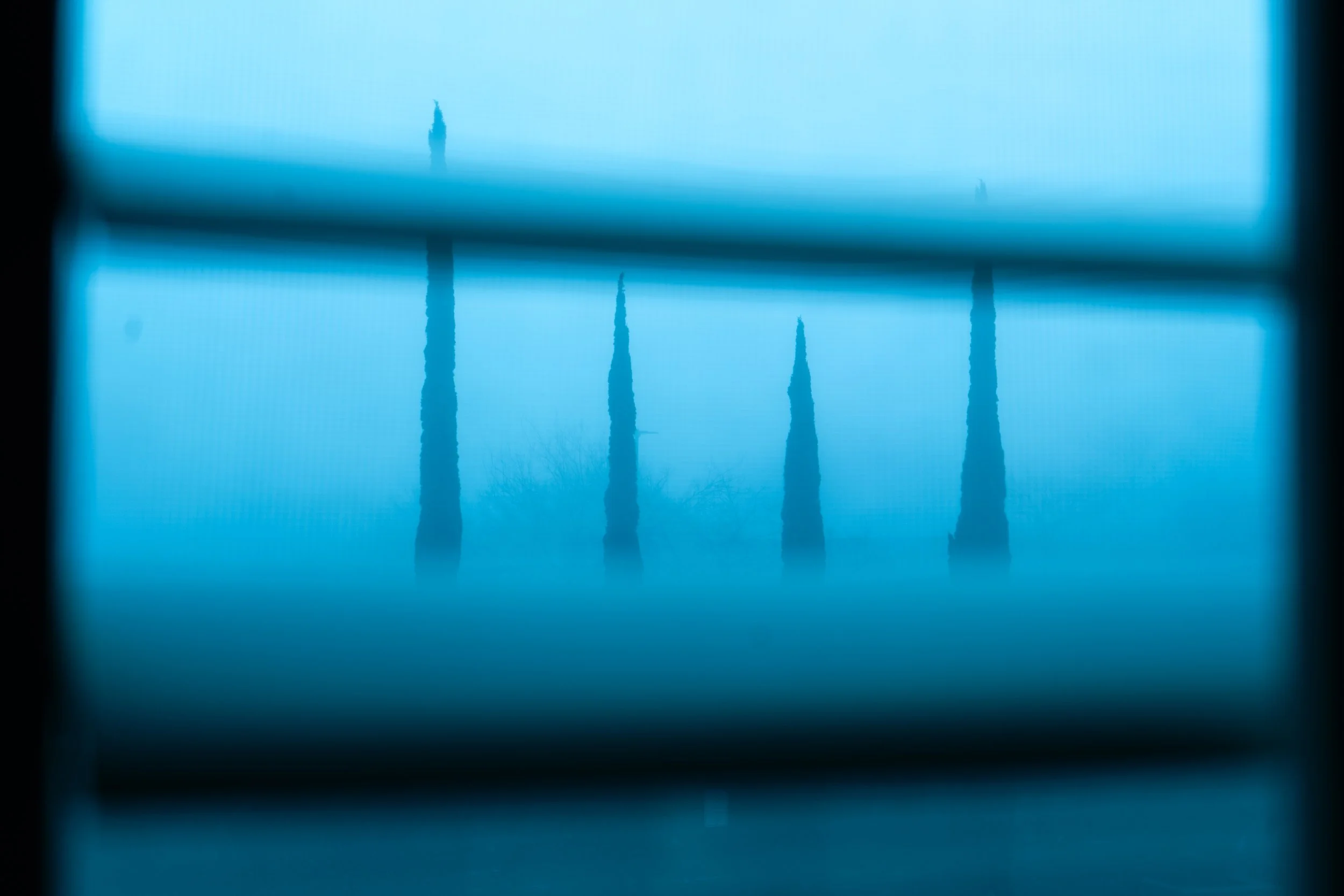
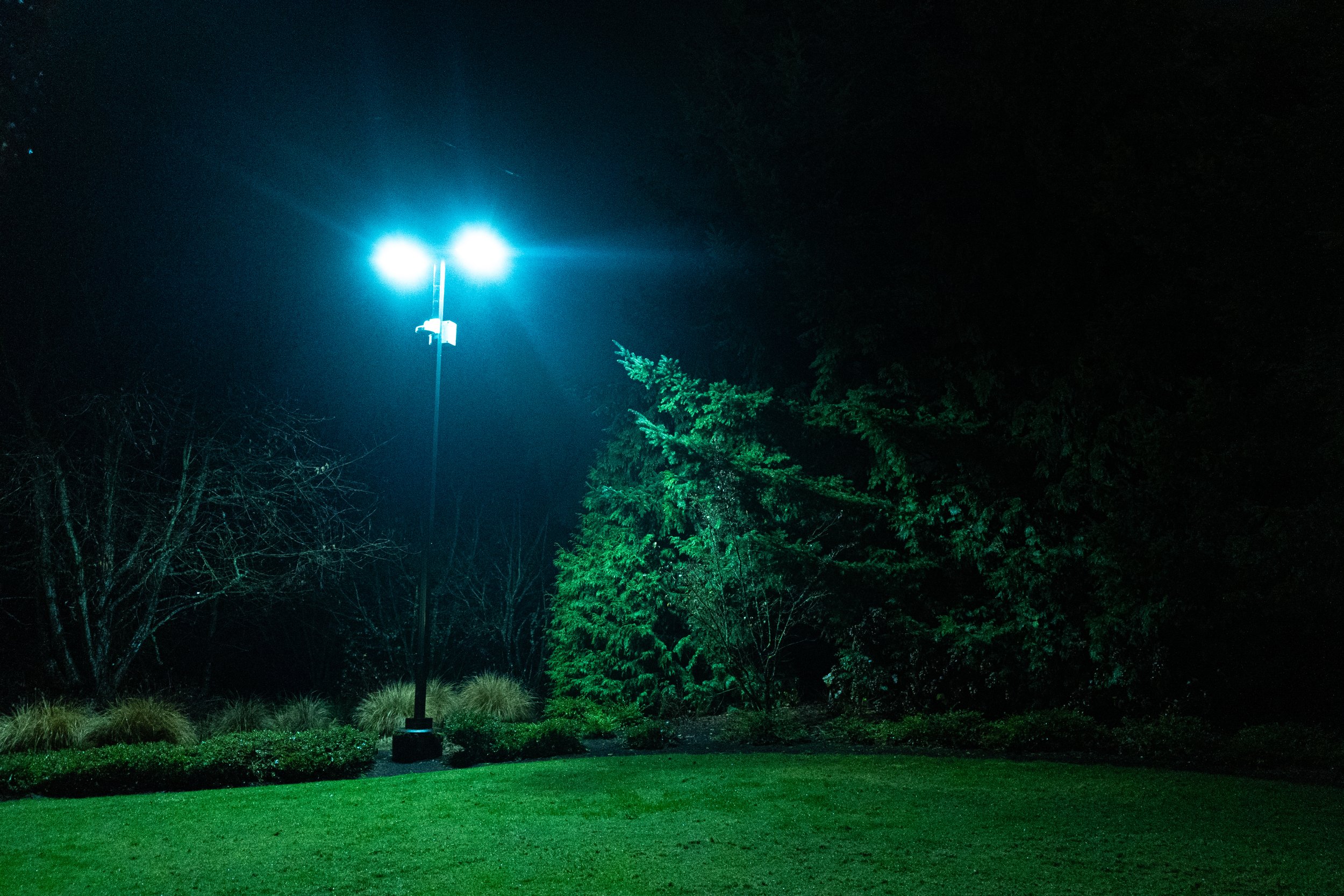
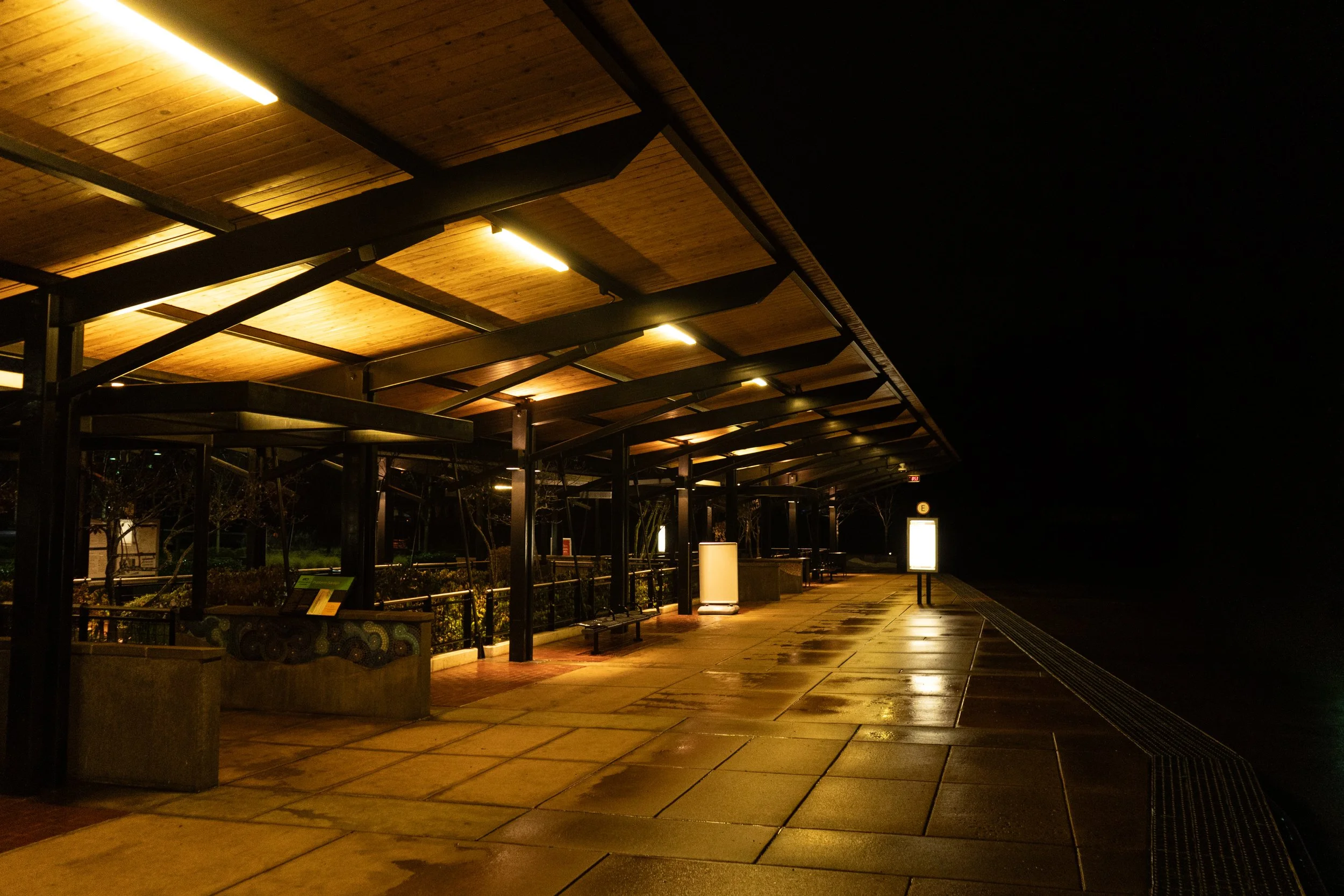
I silently bid a final farewell when the Greyhound eventually pulled away from the station and disappeared around a street corner. The unity of our trip had dissipated as each leftover passenger retreated to different corners. They seemed to evaporate, and I was left alone to wait. I remembered my camera and quietly chuffed as I examined my photographs from the motel. I’d missed so much from today; I felt obligated to at least bookend this trip. I walked about and took a few shots of the streetlights. We were situated in a little town square that stood frozen as it cupped in its hands a low-hanging mist. There were a few shops about, but they were dead for the holidays. I had hoped that by getting to move my feet I would regain some circulation in my toes, but they were now severed from sensation, particularly my index, and the Converse shoes I wore were not at all insulated from the winter chill.
And yet, freed from the bus, I felt the first sense of relief since the motel. I had at least some assurance that in Andrew’s hands, I would get home. I didn’t have to wait long at the station either. In the silence of that dark Christmas Eve, I heard the low and steady rhythmic rumbling of speakers draw closer from a distant block. I crossed the street to a small patch of grass in this town center as Andrew’s car appeared from around the shop corner. His disembodied hand waved to me from a frosted window. I walked out onto the road to meet him, a barrage of EDM spilled out of his car to greet me as I stepped in through the passenger side.
I reclined my seat to its horizontal maximum and stretched my toes to meet the floor heaters. It didn’t seem as if they’d regain feeling until I reached the house. Andrew handed me a glass tupperware filled with warm stew: a gift from Mom. I was still nauseous so I let it sit warm on my lap. I stared up at his felt ceiling as he jovially summarized his own journey to get me. He fiddled with his smartphone strapped to the dashboard, impatiently scrolling through Spotify playlists, cutting songs short in an excessive eagerness to show me all his tracks. I was keenly aware of how sacred the ritual of sharing music was amongst us brothers. It was an unspoken pact: that if I desired to have my own shared taste considered, I must listen with patience to my brothers’ songs, occasionally commenting and giving affirmations whenever they arise in me, no matter how mild a feeling they might be. Trance, House, Dubstep, Drum & Bass: its sonic assault mellowed into a soothing white noise. I closed my eyes and let Andrew guide me the rest of the way.